


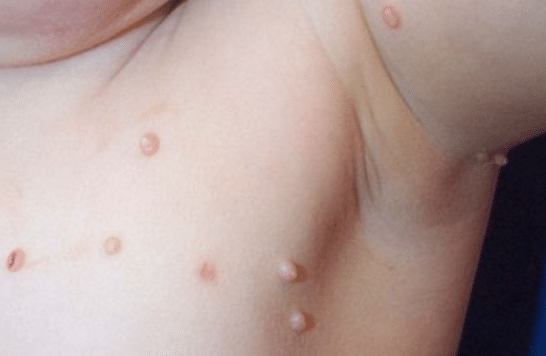
Molluscum Removal for Children

Medically reviewed by Dr. Evelyn Tay
FRCP (Edinburgh), FAMS (Dermatology)
Molluscum contagiosum is very common in children, yet it can still worry parents. The bumps may spread across the arms, legs, trunk, face, or skin folds. Some children scratch them until they become red, crusted, or infected. Others feel embarrassed when the spots appear in visible areas or keep returning despite careful home care.
At Lumine Dermatology & Laser Clinic, we provide child-focused assessments and a comprehensive range of molluscum contagiosum treatment for families seeking clear guidance and professional help. Some cases can be monitored safely. Others benefit from in-clinic treatment to reduce spread, irritation, and discomfort. Our approach is gentle, practical, and tailored to your child’s age, skin type, symptoms, and number of lesions.
What Is Molluscum Contagiosum
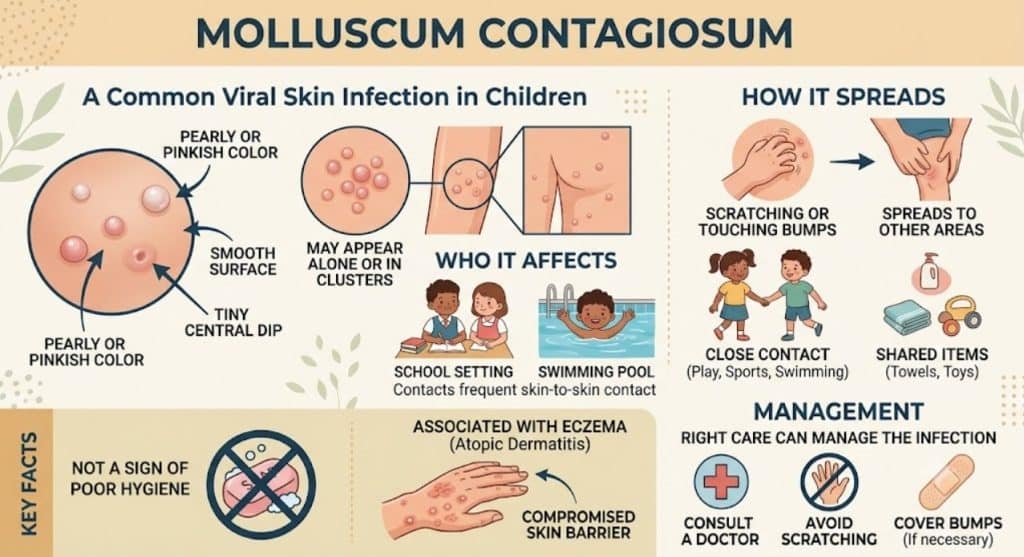
Molluscum contagiosum is a viral skin infection that causes small, smooth bumps on the skin. The bumps are often pearly, pink, white, or skin-coloured. Many have a tiny dip in the centre. They may appear alone or in clusters, and they can spread when a child scratches, rubs, or touches the spots.
The condition often affects children because they have frequent close contact through play, school, sports, swimming, and shared household items. Molluscum contagiosum can also spread from one area of a child’s body to another. It is not a sign of poor hygiene. It is a common childhood infection that can be managed with the right care.
Children with molluscum contagiosum often have a compromised skin barrier, most often in the form of an underlying skin condition such as atopic dermatitis.
When Molluscum Treatment May Help
Many children with molluscum contagiosum do not need immediate removal. The bumps can clear on their own, although this may take several months. Observation may suit children with only a few stable spots, no significant itch, and no rapid spread. Care needs to be taken to maintain the underlying skin barrier and treat any underlying dermatosis such as atopic eczema, to minimize the chance of spread. It is also prudent to check other household members for signs of molluscum, to minimize the risk of spread between children.
Treatment may help when the bumps continue to multiply, cause irritation, or become difficult to manage at home. Some children scratch the spots repeatedly, which can spread the virus to nearby skin and make the area sore. Others develop visible lesions on the face, arms, or legs that affect comfort or confidence during school, swimming, or sports.
At Lumine Dermatology, we assess the number, location, and behaviour of the lesions before recommending treatment. Our aim is to reduce the spread, calm irritated skin, and choose an approach that suits your child’s age, comfort level, and skin sensitivity.
How Molluscum Contagiosum Spreads
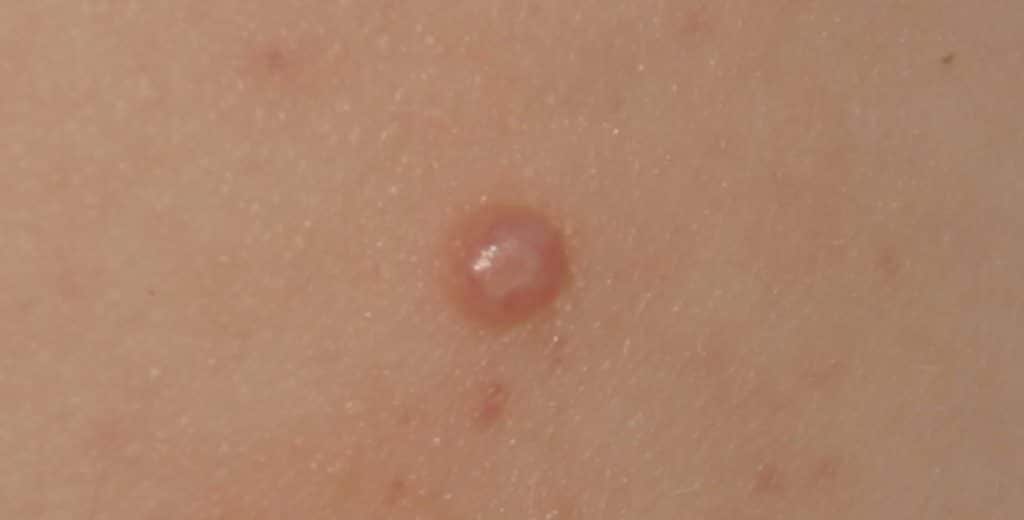
The spread of molluscum contagiosum occurs through contact with infected skin or contaminated items. Towels, clothing, bedding, bath toys, sports gear, and shared personal items can contribute to the spread. Scratching can move the virus across the same child’s skin, creating new bumps in nearby areas.
Children do not usually need to stop school or nursery because of molluscum contagiosum, unless the spots cause other symptoms or the school has specific guidance. Practical prevention can help reduce the spread. Keep the bumps covered where possible, discourage scratching, wash hands regularly, and avoid sharing towels or clothing.
How to Reduce Spread at Home
Simple habits can reduce the spread within the household. Encourage good hand hygiene and keep nails short. Try to cover visible spots with clothing or a suitable dressing, especially during sports or swimming. Do not let children share towels, bath sponges, clothing, or bedding while the infection is active.
Avoid squeezing the bumps at home. This can spread the virus and may lead to infection or scarring. If your child scratches during sleep, soft sleepwear that covers the affected area may help. For eczema-prone skin, it is prudent to address the underlying eczema with prescription topicals, moisturizers or soap substitutes and lower the urge to scratch.
When to See a Dermatologist
Book a dermatology review if the diagnosis is unclear or the bumps are spreading quickly. Molluscum contagiosum can resemble warts, milia, folliculitis, eczema bumps, insect-bite reactions, chickenpox, or other skin infections. A correct diagnosis is crucial for determining the right treatment.
Medical review is also important if the spots become painful, swollen, red, crusted, bleeding, or infected. Bumps near the eyes, genitals, or areas affected by eczema need careful assessment. Children with weakened immunity or widespread lesions should also receive specialist care.
What to Expect During Your Child’s Consultation

Your child’s consultation starts with a careful skin examination. Our dermatologist will check the appearance, number, location, and pattern of the bumps. We will ask how long they have been present, how quickly they have spread, and whether your child has itching, eczema, pain, bleeding, or a history of prior treatment.
The consultation also gives parents a clear plan. In some cases, reassurance and prevention advice may be enough. In others, treatment can reduce the number of spots and limit further spread. We explain the options thoroughly, including comfort, aftercare, the likely number of visits, and what to do if new bumps appear.
Molluscum Contagiosum Treatment Options
Your child's age, how comfortable they are with treatment, their skin's sensitivity, the placement of the bumps, and the quantity of lesions all influence the approach to molluscum contagiosum treatment. Some children need watchful waiting with moisturiser, itch control, and spread-prevention advice. This may suit mild cases that do not bother the child.
When removal is suitable, treatment may involve topical medication (imiquimod, tretinoin) or in-clinic removal methods selected by the dermatologist. Options can include careful expression of lesions, cryotherapy, cantharidin application, curettage, or other targeted approaches in appropriate children. Not every method suits every child. Younger children, sensitive areas, numerous lesions, and eczema-prone skin need a gentler plan.
Prescription topicals
We have available imiquinod cream and tretinoin to be applied to molluscum lesions.
Imiquimod is a Toll-like receptor 7 agonist which stimulates our intrinsic immune system to recognize the molluscum virus and boost an inflammatory immune response against the virus, effectively encouraging the body to recognize the virus and get rid of it on it’s own. Success rates are variable and treatment may take up to 16 weeks.
Tretinoin 0.05% can be prescribed to normalize skin, differentiate, and create a mild irritant reaction to target molluscum clearance. Success rates are also variable with tretinoin treatment and our dermatologist will assess the child for suitability for tretinoin or imiquimod.
In-Clinic Procedures
We provide prick and express treatments, cryotherapy, cantharidin and electrocautery procedures to manage molluscum removal.
Prick and Express
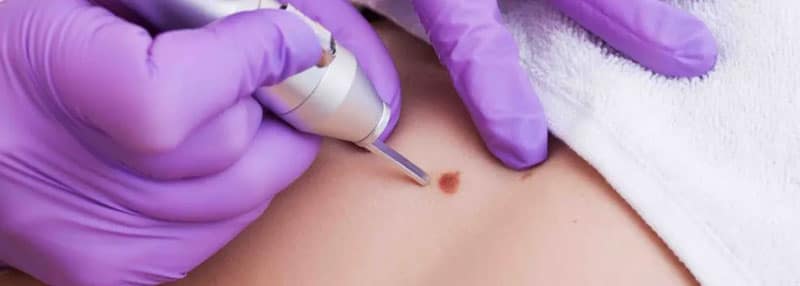
This is a highly effective procedure usually performed by the doctor with the application of topical anaesthetic prior. Post-procedure, there will be some red marks on the skin that will take a few days to clear. But this does not lead to any permanent scarring and the child can shower and resume normal activities on the same day. An average of 2 to 4 sessions are required, often done in combination with prescription topicals to enhance treatment efficacy.
Cantharidin Application
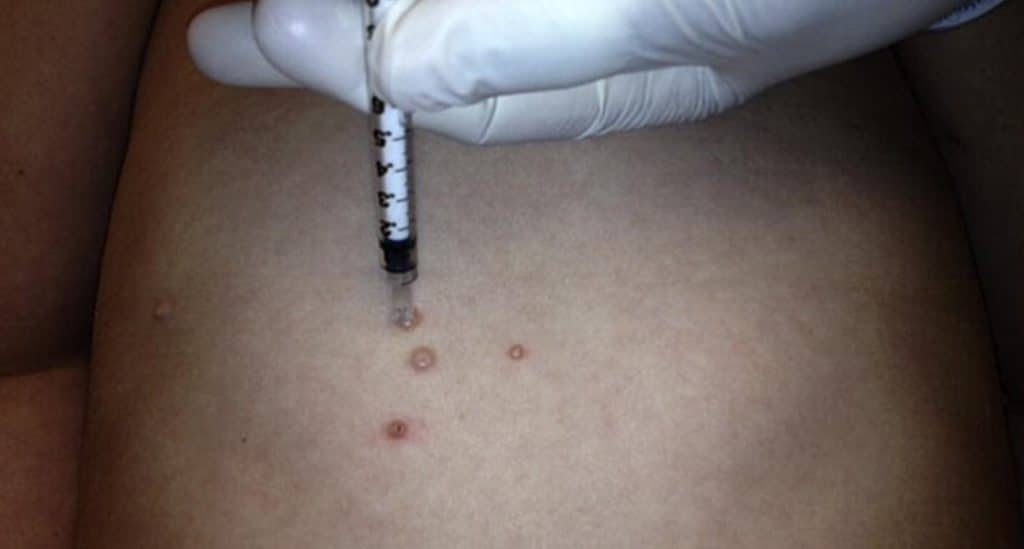
This is a painless procedure that can be performed without any anaesthesia. Caregivers need to watch out for blistering or crusting post-treatment and will be educated on proper blister care over the next 1-2 days. A few sessions are required and treatment is most effective when combined with prescription topicals or prick and express procedures. The child can resume normal activities (with the exception of swimming) on the same day.
Cryotherapy
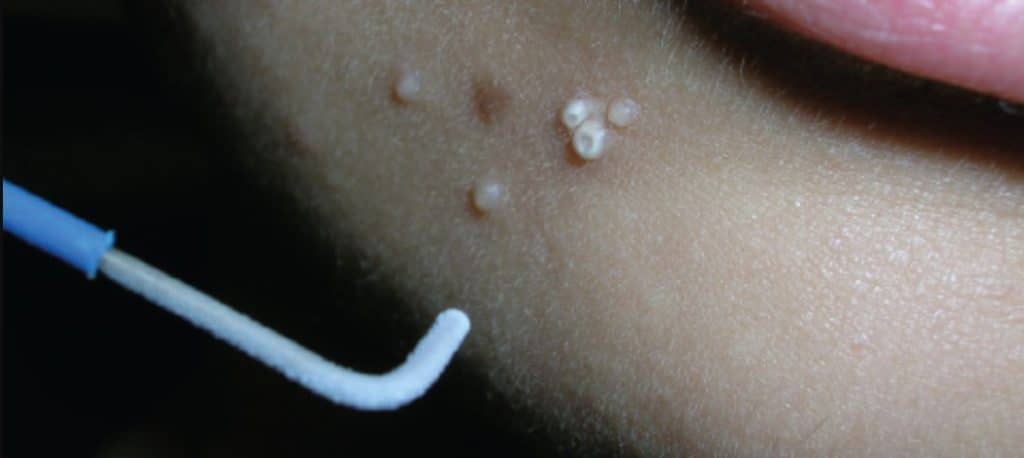
This can be performed without local anaesthetic but there can be some discomfort during treatment. There can be blistering, redness or crusting post cryotherapy and there may be some hypo- and hyper-pigmentation at the site of cryotherapy that may take a few months to recover. The child can reduce normal activities but may experience a slight discomfort at treated sites for a few days.
Electrocautery and dessication
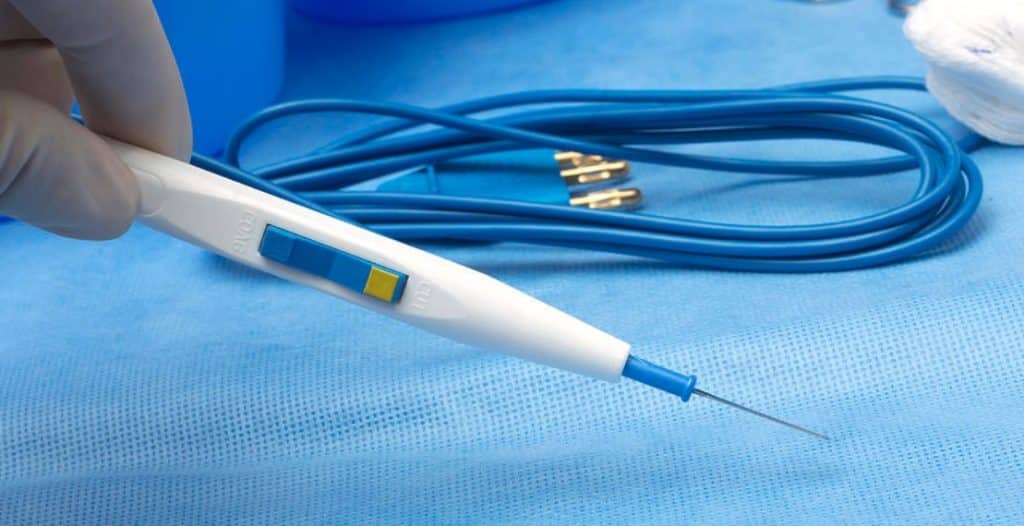
This procedure is performed with topical anaesthesia and cryo-cooling and can be a useful treatment option in stubborn molluscum. Rarely, sedation is required. Post-procedure, there will be scabbing and redness that can take 1-2 weeks to resolve. There might be some pigmentary changes (hyp- and hyperpigmentation) at the sites of treatment but this treatment option for molluscum seldom results in permanent scarring.
Our Approach to Child Comfort
Children need a calm environment, a clear explanation, and a plan that respects their comfort. At Lumine Dermatology, we will curate a treatment based on the child’s disposition and tolerance, as well as the number and location of molluscum. A few lesions in easy-to-treat areas may require a different approach than widespread bumps on sensitive skin. We usually use topical anaesthetic, distraction methods, and cryo-cooling during procedures to keep the child comfortable.
We also guide parents on what to expect after treatment. Some mild redness, crusting, or temporary marks may occur depending on the method used. The aim is to treat the lesions while reducing distress, unnecessary trauma, and preventable scarring. If a child is very anxious or the lesions are widespread, staged treatment may be safer and more comfortable.
Molluscum and Eczema
Molluscum contagiosum can trigger itchy, dry, inflamed skin around the bumps. This can look like an eczema flare. Signs of inflammation around existing molluscum is termed the BOTE (Beginning Of The End) sign. This usually signals an inflammatory response that the body has recognized the virus and often correlates with imminent viral resolution. If the child is not in too much discomfort and the lesion is not infected, it is reasonable to leave an inflamed molluscum alone and await spontaneous resolution.
Correspondingly, children with eczema may scratch more, which can spread the virus and create more bumps. Treating the surrounding dermatitis and protecting the skin barrier can help reduce itching and slow down or prevent the spread of molluscum.
A dermatologist may recommend moisturisers, gentle cleansers, short-term anti-inflammatory treatment, or infection care if the skin is crusted or sore. This part of care is important because removal alone may not solve the problem if scratching continues. Calming the eczema can reduce the spread and help the skin recover more comfortably.
Aftercare After Molluscum Removal
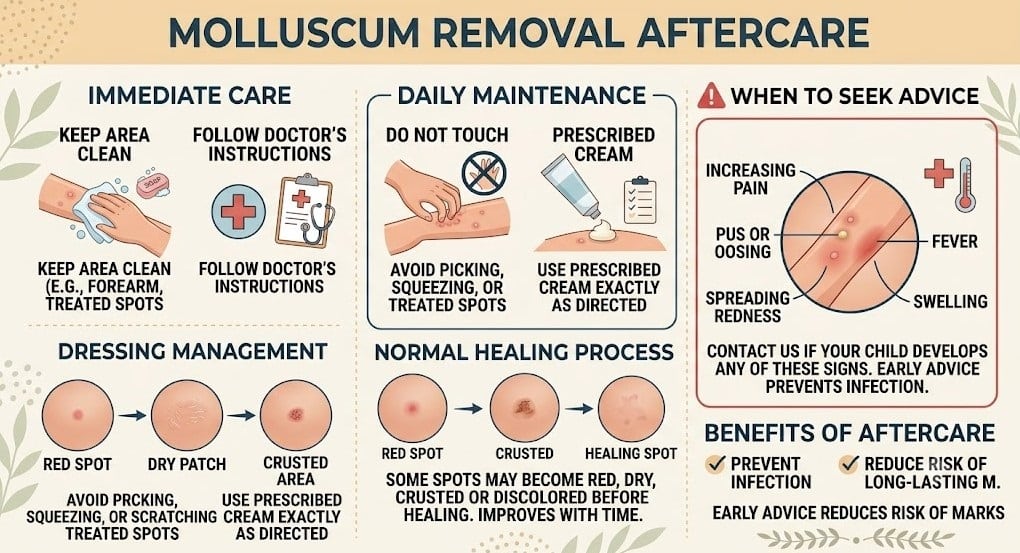
After treatment, keep the area clean and follow the doctor's aftercare instructions. Avoid picking, squeezing, or scratching treated spots. If a dressing is applied, keep it on for the recommended period. Use any prescribed cream exactly as directed.
Some treated areas may become red, dry, darker, lighter, or crusted before healing. This usually improves with time. Do contact us if your child develops increasing pain, pus, spreading redness, fever, or swelling. Early advice helps prevent infection and reduces the risk of longer-lasting marks.
Why Choose Lumine Dermatology for Molluscum Contagiosum in Singapore

Lumine Dermatology & Laser Clinic offers specialist paediatric dermatology care for children with viral skin infections, eczema, rashes, birthmarks, acne, and other skin concerns. Our care is led by an experienced Ministry of Health-accredited dermatology specialist with training across medical, surgical, paediatric, laser, and aesthetic dermatology.
Families choose Lumine Dermatology for careful diagnosis, child-focussed treatment options, and a range of services available to tackle molluscum. We aim to make your child as comfortable as possible with gentle and thoughtful care,
Book a Paediatric Molluscum Consultation
If your child has small pearly bumps that are spreading, itching, crusting, or causing concern, a dermatology review can give you clarity. You do not need to decide on removal before the appointment. The first step is to confirm the diagnosis and discuss suitable options.
Contact Lumine Dermatology & Laser Clinic to book a paediatric consultation for molluscum contagiosum in Singapore. Our team will guide you through diagnosis, treatment choices, aftercare, and prevention advice for your child.
FAQs
Does Molluscum Contagiosum Need Treatment
Not always. Many cases clear on their own, although this can take months or longer. Treatment may be helpful if the bumps spread, itch, become infected, appear in sensitive areas, or cause distress.
Is Molluscum Contagiosum Contagious
Yes. Molluscum contagiosum can spread through skin-to-skin contact and shared personal items. Scratching can also cause spread of the virus to other areas of the body. Covering spots, avoiding sharing of personal items, and regular handwashing can help reduce the spread.
Can My Child Go To School With Molluscum Contagiosum
Most children can continue school and normal activities. Covered lesions, good hygiene, and avoiding shared towels can help reduce transmission. If the spots are infected, painful, or difficult to cover, seek medical advice.
Is Molluscum Removal Painful
Discomfort depends on the treatment method, number of lesions, and location. We choose a child-conscious approach and explain comfort options during consultation. Some children need staged treatment to keep the experience manageable.
Can Molluscum Contagiosum Leave Scars
Molluscum contagiosum often heals without scarring. Scratching, squeezing, infection, and aggressive home removal can increase the risk of marks or scars. Dermatologist-guided care helps reduce avoidable skin trauma.
Why Does My Child Have Eczema Around the Bumps
Molluscum can irritate the surrounding skin and trigger an eczema-like rash. Children with eczema may scratch more, which can spread the virus. Treatment may need to address both the bumps and the surrounding inflammation.
Can Molluscum Come Back After Treatment
New bumps can appear if the virus has already spread under the skin before treatment or if the child has further contact with the virus. Follow-up may be needed if new lesions develop.
When Should I Seek Urgent Advice
Seek prompt medical advice if the bumps become very painful, swollen, hot, crusted, bleeding, or filled with pus. Parents should also monitor the lesion count and seek advice if the number of molluscum lesions increases at a quickened pace over time. Also seek review for lesions near the eyes, widespread lesions, or molluscum in a child with a weakened immune system.

Dr. Evelyn Tay
FRCP (Edinburgh), FAMS (Dermatology)

