Dr Evelyn Tay is a MOH-accredited Consultant Dermatologist with over 15 years of experience, specialising in Mohs surgery, skin cancer treatment, aesthetics and laser therapy.
A damaged skin barrier does not need a complicated recovery plan. In many cases, the skin is reacting to too much cleansing, too many active ingredients, repeated exfoliation, an unsuitable product combination, or a flare of an underlying skin condition. Adding more products can make the picture harder to read.
A better approach starts with reducing irritation and giving the skin fewer variables to deal with. Cleansing, moisturising and sun protection form the core of most recovery routines. Everything else should earn its place based on what the skin can tolerate and what condition you are actually treating.
Barrier repair also has limits. Persistent burning, repeated facial rashes, eyelid irritation or redness that returns despite a simplified routine can point to eczema, rosacea, contact dermatitis or another inflammatory condition. In those cases, skincare alone may not be enough.
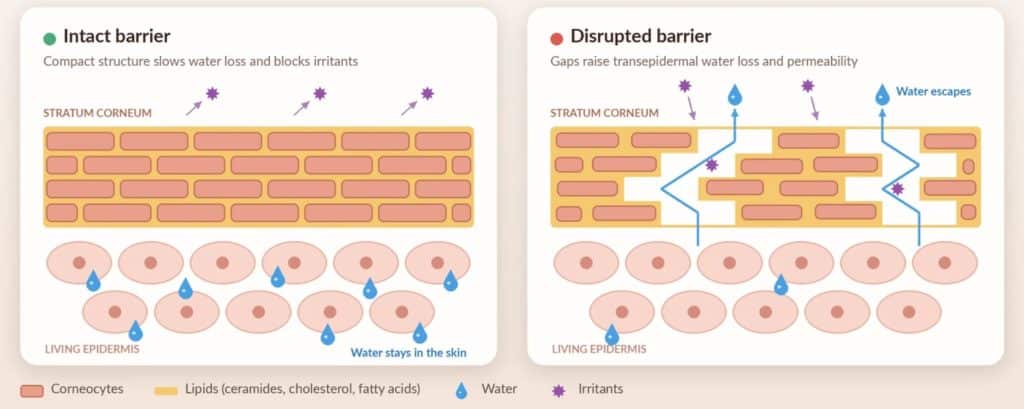
The outermost layer of the epidermis is called the stratum corneum. It contains flattened corneocytes surrounded by lipids, including ceramides, cholesterol and free fatty acids. These components create a compact structure that slows water loss and reduces penetration of irritants.
When that structure becomes disrupted, transepidermal water loss increases. Skin loses water more easily and becomes more permeable. Products that once felt comfortable may start to sting because irritated skin reacts differently to ingredients that previously caused no problem.
Barrier function also depends on more than surface oil. A face can look shiny and still have impaired barrier function. Oily, acne-prone and combination skin can all become dry, tight and reactive after aggressive treatment.
Damaged Skin Barrier Symptoms
Barrier disruption can show up through changes in both skin texture and sensitivity. Tightness after cleansing, flaking, rough patches, redness, burning, or tenderness may develop gradually, especially after over-exfoliation, frequent use of active ingredients, or repeated irritation.
A change from your usual baseline often gives the clearest indication that something is wrong. Products that previously felt comfortable may start to sting, and moisturiser may no longer relieve dryness as effectively as before. When several of these changes appear together and persist, the skin barrier may need time to recover.
Typical signs include:
tightness that lasts after washing
rough or flaky patches
burning or stinging when basic skincare is applied
increased sensitivity to products that were previously tolerated
diffuse redness or tenderness
itching
dehydration that does not improve despite repeated serum application
sensitivity after retinoids, acids or acne treatment
One isolated symptom does not confirm barrier damage. Tightness after a harsh cleanser may simply point to the cleanser itself. Burning, peeling and persistent reactivity across several products suggest broader irritation and deserve a more cautious routine.
Breakouts can appear at the same time, which complicates the picture. Irritation can create small red bumps that resemble acne. Rosacea, perioral dermatitis and contact dermatitis can do the same. Escalating acne treatment without checking the cause can intensify the reaction.
Over-Treatment Is a Common Cause
Many modern skincare routines contain several biologically active products. A retinoid may be used at night, followed by exfoliating acids on alternate evenings, benzoyl peroxide for breakouts and a low-pH vitamin C serum in the morning. Each product can have a legitimate purpose. The problem often comes from cumulative irritation.
Frequency can be just as relevant as concentration. A product tolerated twice a week may cause persistent peeling when used nightly. Combining several exfoliating steps can produce a similar effect even when no single product seems particularly strong.
Physical irritation adds another layer. Hot water, facial brushes, abrasive scrubs, frequent wiping, rough towels and repeated picking at flaky skin can prolong inflammation. Skin that is already irritated needs less friction, not a more aggressive cleansing method.
Start by Editing the Routine
When skin begins to burn, peel, or feel unusually tight, review your current routine before buying anything new. Identify the products most likely to increase cell turnover, exfoliate the surface or cause dryness. These often include retinoids, glycolic acid, lactic acid, salicylic acid, benzoyl peroxide and strong acidic serums.
A short pause can allow irritated skin to settle. This does not mean those ingredients are unsuitable forever. It means your skin may need a period of less stimulation before you return to them.
Prescription treatment needs a different approach. If a dermatologist has prescribed a retinoid, acne medication, or another topical treatment, don't stop or change it automatically. You can often adjust frequency, formulation, and moisturiser use instead.
Keep Cleansing Simple
A cleanser should remove sunscreen, makeup, sweat and surface debris without leaving the skin persistently tight. During recovery, mild fragrance-free formulas are usually easier to tolerate than foaming or highly degreasing cleansers.
Water temperature can change how the skin feels afterwards. Lukewarm water creates less thermal stress than very hot water. Hands are usually enough for cleansing. Brushes, textured cloths, and scrubs add friction when the skin is already reactive.
Some people with dry or sensitive skin do not need a full cleanser every morning. A rinse may be enough before moisturiser and sunscreen. Evening cleansing remains more relevant because sunscreen, makeup and accumulated residue need to come off before bed.
If the skin feels stretched immediately after washing, reassess the cleanser before adding another hydrating product to compensate.
Build Moisture Back With the Right Formulation
Moisturisers contain ingredients that perform different jobs. Humectants such as glycerin attract water into the outer skin. Emollients smooth the spaces between dry surface cells. Occlusive ingredients such as petrolatum and dimethicone reduce water loss from the surface.
Barrier lipids add another layer of support. Ceramides, cholesterol and free fatty acids occur naturally within the stratum corneum. Formulas containing these lipids can work well for dry or eczema-prone skin, particularly when barrier disruption forms part of the problem.
The full formulation deserves more attention than one headline ingredient. A well-balanced moisturiser can provide hydration, emollience and occlusion in a single product. Adding separate hyaluronic acid, ceramide and niacinamide serums may add complexity without improving recovery.
Texture should match the skin. Rich creams and ointments can suit very dry areas. Lighter creams or lotions may feel more comfortable for acne-prone skin or during Singapore’s warmer weather.
Ceramides Are Not the Only Ingredient to Look For
Ceramide moisturisers receive a great deal of attention in barrier-focused skincare, and for good reason. Ceramides form a major part of the lipid matrix in the stratum corneum. Their presence in a formulation can support dry or compromised skin.
They are not the only route to a well-formulated moisturiser. Glycerin, petrolatum, dimethicone, squalane and other emollient or occlusive ingredients can contribute significantly to skin comfort and water retention.
Niacinamide may support barrier function and suit many people, although high-strength serums can sting when the skin is already reactive. Hyaluronic acid can increase hydration, but it does not perform the same role as an occlusive moisturiser.
During recovery, fewer well-chosen ingredients usually make it easier to judge what the skin tolerates.
A BasicSkin Barrier RepairRoutine
A temporary routine does not need many steps.
Morning
Evening
Gentle rinse or mild cleanser if needed
Mild cleanser
Moisturiser
Moisturiser
Broad-spectrum sunscreen
Optional occlusive on very dry areas
This framework can be adjusted according to skin type. Very dry or eczema-prone skin may need a richer moisturiser. Acne-prone skin may prefer a lighter cream that supports the barrier without feeling heavy.
You can apply an occlusive such as petrolatum selectively over very dry patches. Covering the entire face isn't necessary for everyone, particularly for people prone to folliculitis, acne, or perioral eruptions.
If you are asking how to repair the skin barrier, the practical answer often starts here. Reduce avoidable irritation, simplify the routine and give the skin enough time to stabilise before adding active products back.
Sunscreen Still Needs a Place
UV exposure adds another source of skin stress and can intensify post-inflammatory pigmentation after irritation. A broad-spectrum sunscreen remains part of a sensible morning routine when the skin tolerates it.
No universal rule says compromised skin needs mineral sunscreen. Organic and mineral filters can both work well. The surrounding formula often influences comfort more than the filter category alone.
Fragrance, high alcohol content and certain texture-enhancing ingredients may sting some reactive skin. If several sunscreens cause immediate burning, stop cycling through products rapidly. Physical protection from hats, shade and reduced direct exposure can support sun protection while persistent sensitivity is assessed.
Singapore’s Climate Changes the Practical Routine
Humid weather does not prevent barrier impairment. Sweat, repeated cleansing, air conditioning and friction from masks or clothing can still aggravate already reactive skin.
Sweat can sting compromised skin, especially around the nose, upper lip, neck and skin folds. After exercise, rinsing sweat away and applying moisturiser can feel more comfortable than allowing salt residue to remain on irritated skin.
Air-conditioned environments create a different sensation. People spending long periods indoors may notice more tightness even when outdoor humidity is high. Moisturiser choice may need to reflect how much time you spend in both conditions, not just the climate.
Heavy ointments are not automatically necessary in Singapore. A lighter cream can provide enough barrier support for some people and feel easier to wear during the day.
Retinoids and Acids Can Return Gradually
Once cleansing feels comfortable again and moisturiser no longer stings, you can reintroduce active products one at a time. There is little value in restarting retinoids, acids and acne treatments simultaneously.
A retinoid that previously caused irritation may need to be used less often. Starting once or twice a week can give the skin time to adapt. You can apply moisturiser before or after the retinoid if that improves tolerance.
Exfoliating acids do not need to return on the same nights. For many people, combining several exfoliating products creates more irritation than benefit.
If one product repeatedly causes burning, peeling, or persistent redness, changing the formulation or frequency may work better than repeatedly pushing through irritation.
Recovery Does Not Follow a Fixed Calendar
There is no standard number of days required for skin barrier repair. Mild irritation can settle relatively quickly once you remove the trigger. More pronounced dermatitis, irritation after a procedure or repeated over-treatment may take longer.
The skin itself gives better information than a countdown. Cleansing should feel comfortable. Moisturiser and sunscreen should stop stinging. Flaking should settle, and the skin should no longer feel persistently tight.
A routine that keeps causing fresh irritation can prolong recovery. Adding new products every few days also makes it harder to identify the source of the problem.
If symptoms remain unchanged or continue returning after a simplified routine, another diagnosis becomes more likely.
Barrier Damage and Dermatitis Can Look Similar
Atopic eczema often includes impaired barrier function, but eczema is not simply a damaged barrier. Immune inflammation plays a major role and may need medical treatment.
Rosacea can cause burning, stinging and redness without obvious scaling. Irritant contact dermatitis can develop after repeated exposure to harsh skincare, while allergic contact dermatitis can appear after sensitisation to an ingredient such as fragrance, preservative or botanical extract.
Seborrhoeic dermatitis can create redness and scale around the nose, eyebrows and scalp. Perioral dermatitis may cause small inflammatory bumps around the mouth or nose. These conditions need different treatment approaches.
A routine becomes less productive when every recurrence is treated as barrier damage. Persistent or patterned inflammation deserves a diagnosis.
When Dermatology Assessment Makes Sense
Seek medical assessment when burning, itching, redness or scaling persists despite reducing irritating products. Recurrent eyelid dermatitis, facial swelling, painful cracking, weeping or crusting should also receive closer attention.
Rapid swelling, blistering or a severe reaction after a new product warrants earlier review. Signs of infection such as increasing pain, warmth, pus or spreading redness need medical assessment as well.
Contact allergy may require patch testing in selected patients. Eczema, rosacea and other inflammatory conditions may need prescription treatment before skincare can feel comfortable again.
How Lumine Dermatology Can Help
Lumine Dermatology & Laser Clinic assesses persistent skin sensitivity, dryness, burning and recurrent facial irritation when routine changes have not resolved the problem. The consultation considers the pattern of symptoms, recent skincare changes, active ingredients, previous procedures and any signs pointing to an inflammatory skin condition.
Treatment may involve simplifying the routine, changing product types, adjusting the use of active ingredients or treating an underlying condition such as eczema, rosacea or contact dermatitis. Patients recovering from dermatological or aesthetic procedures may need a different aftercare plan from someone whose irritation developed gradually through skincare.
A stable routine should eventually feel straightforward. Cleansing should not leave the skin sore, moisturiser should feel comfortable and active products should return only when the skin can tolerate them. When those basic steps remain difficult, repeated product changes are rarely the best next move. A dermatology assessment can identify the cause and guide treatment more precisely.
Frequently Asked Questions
Can acne-prone skin have a damaged barrier?
Yes. Frequent cleansing, benzoyl peroxide, retinoids and exfoliating acids can irritate acne-prone skin. The skin may become tight, flaky and reactive even while remaining oily in other areas.
Treatment needs to balance acne control with tolerability. A lighter moisturiser and reduced frequency of irritating products may allow acne treatment to continue without repeatedly destabilising the skin.
Why does moisturiser sting when my skin is irritated?
Inflamed or highly permeable skin can react to ingredients that normally cause no sensation. Mild transient stinging can occur, especially on recently irritated areas.
Persistent burning, swelling or a worsening rash is different. Stop the product and seek assessment if the reaction continues or appears with several unrelated products.
Should I stop retinol while repairing my skin barrier?
A temporary pause can be sensible when the skin is actively peeling, burning or persistently red. Once your skin feels comfortable again, you can often return to retinoids at a lower frequency.
If irritation recurs every time you restart treatment, the concentration, formulation, or frequency may need to change.
Is petrolatum good for barrier repair?
Petrolatum reduces water loss from the skin and can work well over very dry or cracked areas. You can apply it over moisturiser when you need extra occlusion.
Full-face application is unnecessary for many people. Targeted use can be more comfortable for acne-prone or humid-climate skin.
How do I know when my skin barrier has recovered?
Look for normal tolerance rather than a specific number of days. Washing should no longer cause persistent tightness, basic moisturiser and sunscreen should feel comfortable and active flaking should have settled.
Active skincare can then return gradually. If basic products still burn or the same rash keeps returning, another skin condition may be contributing.
Healthy skin, Happy mood.
We've got your back!
Every skin concern matters. Drop an enquiry, and we'll get back to you within one working day.
Address:
1 Scotts Road #04-15/16 Shaw Centre Singapore 228208
Operation hours
Mon-Fri - 9am to 6pm | Sat - 9am to 1pm | Closed on Sundays & Public Holidays