Dr Evelyn Tay is a MOH-accredited Consultant Dermatologist with over 15 years of experience, specialising in Mohs surgery, skin cancer treatment, aesthetics and laser therapy.
Facial contours often change gradually as the skin loses elasticity and underlying tissues begin to descend. Cheeks may appear less defined, early jowls can soften the jawline, and eyebrows may settle lower. For selected patients with mild facial sagging, a thread lift offers a minimally invasive approach to repositioning tissue without a surgical facelift.
The procedure uses specially designed threads beneath the skin to provide mechanical support and a degree of lifting. Some thread materials also encourage a local collagen response as the tissue heals. The results are generally modest and temporary, and facial anatomy, skin quality, thread placement, and the amount of tissue needing support influence the outcome.
Understanding the procedure before treatment is particularly relevant because thread lifting has limitations and potential complications. Facial thread lifts and nose thread lifts also serve different purposes, despite using similar materials.
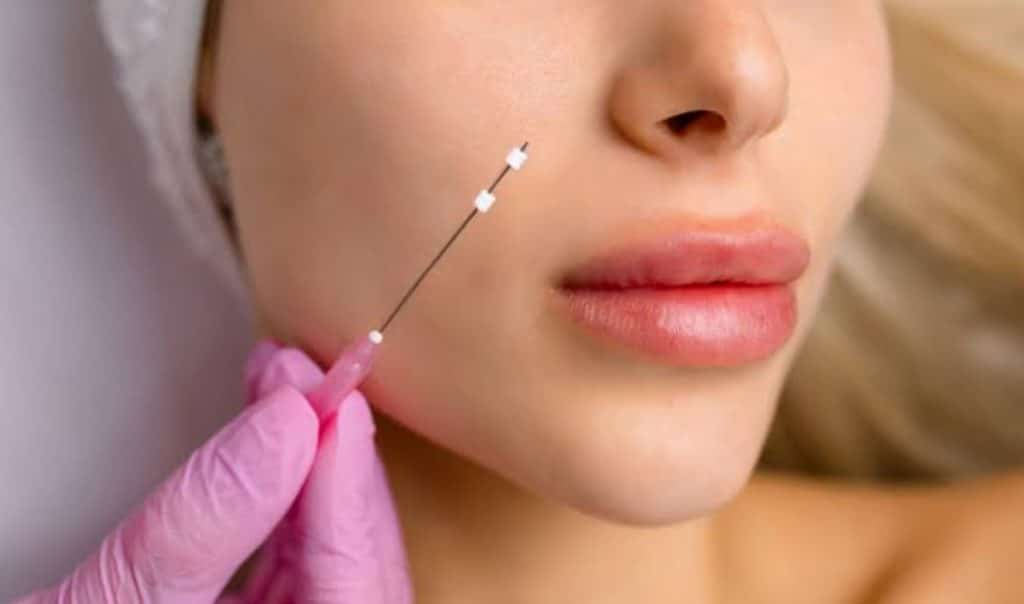
Facial thread lifting uses medical-grade sutures to support and reposition selected areas of soft tissue. The practitioner introduces the threads beneath the skin through small entry points, following a planned direction that corresponds to the intended lifting effect.
Many lifting threads contain tiny barbs, cogs or cones that engage the surrounding tissue. When the practitioner adjusts their position and tension, these structures help move mildly descended tissue towards a higher position. Smooth threads have a different role and generally provide little direct mechanical lifting.
The procedure also produces a local healing response around the inserted material. As tissue reacts to the threads, collagen may develop along their pathway. This can contribute to firmness, although the immediate lifting effect comes primarily from mechanical support rather than collagen production.
Thread placement does not reproduce the deeper anatomical changes achieved through surgical facelift techniques. The procedure cannot remove substantial excess skin or comprehensively reposition the deeper facial support structures. Its role is better suited to relatively limited contour changes in carefully selected patients.
What Types of Threads Are Used?
Thread lifts can involve several absorbable suture materials. Common examples include polydioxanone (PDO), poly-L-lactic acid (PLLA) and polycaprolactone (PCL). These materials differ in their physical properties, tissue response and absorption characteristics.
PDO threads have a history of medical use as absorbable sutures. PLLA- and PCL-based threads are also used in aesthetic procedures, sometimes combined with other materials. The duration of tissue support depends on the specific product, its structure and how the surrounding tissue responds.
Thread design can influence the intended result as much as the material itself. Barbed or cogged threads aim to engage and reposition tissue. Smooth threads are generally intended to encourage a local tissue response rather than produce substantial lifting. Some systems use cones or other anchoring structures.
There is no universal thread type that suits every face. Skin thickness, tissue mobility, the direction of sagging and the desired degree of correction all influence the choice. Selecting a thread solely because it has a longer advertised absorption period does not guarantee a stronger or longer-lasting cosmetic result.
Which Facial Areas Can aThread LiftImprove?
The most suitable areas are those where a relatively small movement of soft tissue can improve facial definition. Thread lifting may be considered for early cheek descent, mild jowling, reduced jawline definition, or selected brow-position concerns.
The result depends on which facial structure drives the visible change. Fullness along the lower face may reflect descending tissue, excess fat, volume loss elsewhere or a combination of these factors. A thread cannot correct every contributor to the same facial contour.
Treatment area
Potential improvement
Midface and cheeks
Modest repositioning of mildly descended cheek tissue
Lower face and jowls
Reduction in the appearance of early jowling
Jawline
Improved definition in selected patients with mild tissue descent
Outer brow
Limited elevation or repositioning of the brow tail
Lower facial contour
Subtle changes to tissue position where adequate support is possible
Facial ageing often involves simultaneous changes in skin elasticity, fat distribution, muscle activity and skeletal support. A patient with hollow cheeks and prominent folds may need a different approach from someone with adequate facial volume and mild tissue descent.
Overcorrecting the position of one area can also affect facial balance. The aim should be a measured improvement in contour while preserving natural expressions and the relationship between neighbouring facial structures.
Who May Be Suitable for Thread Lifting?
A suitable candidate generally has mild facial laxity, adequate tissue quality and a specific contour concern that can respond to mechanical repositioning. Patients with early jowling or modest cheek descent may be more appropriate candidates than those with substantial loose skin.
Skin thickness and facial volume also influence the outcome. Very thin skin may make threads more noticeable, while heavy or extensively descended tissues may be difficult to support. Significant facial hollowing cannot be corrected simply by pulling the remaining tissue upwards.
The practitioner also needs to assess previous procedures, including dermal fillers, facial surgery and earlier thread treatments. Existing implants, scars, active skin infections and certain medical conditions can alter the treatment plan or make the procedure unsuitable.
Expectations deserve equal consideration. A thread lift can provide limited contour improvement, but it cannot replicate the results of a surgical facelift. Patients seeking major correction of loose skin or extensive lower-face sagging may be better served by a different procedure.
What Happens During the Consultation?
Treatment planning begins with an examination of the facial contours and the tissues contributing to the patient's concern. The practitioner assesses skin elasticity, tissue thickness, areas of volume loss and the direction in which facial structures have descended.
Facial movement is part of this assessment. A contour that looks suitable for lifting at rest may behave differently during smiling, speaking or chewing. The proposed thread pathway needs to account for these movements to reduce the risk of visible tension or an unnatural result.
The consultation should also cover medical history, current medication, previous procedures and any tendency towards unusual scarring or poor wound healing. Blood-thinning medication and supplements can affect bruising or bleeding risk. Patients should not discontinue prescribed medication without advice from the clinician responsible for their care.
Before proceeding, the practitioner should explain the proposed treatment areas, the type of thread, anticipated improvement, recovery restrictions and possible complications. Photographs may be taken to document the starting facial contours and provide a consistent basis for later assessment.
What to Expect During theThread LiftProcedure
The practitioner marks the intended thread pathways after finalising the treatment plan. The area is then cleansed, and local anaesthesia is administered to reduce discomfort during insertion. Some techniques also involve topical numbing measures.
Depending on the thread system, the practitioner uses a needle or cannula to guide the thread through the planned tissue layer. The practitioner positions and adjusts threads to achieve the intended tissue support. The insertion technique and number of threads vary according to the facial area and degree of correction.
Patients may feel pressure, pulling, or an unfamiliar sensation as the threads are placed. Local anaesthesia reduces pain, although it may not eliminate every sensation associated with tissue movement.
The procedure generally takes less time than surgical facial lifting, but the duration depends on the number of treatment areas and threads. Small puncture marks remain afterwards, and certain techniques may require slightly larger entry points or incisions.
Some lifting may be visible immediately. Swelling and temporary tension can make the initial contour look different from the final result, so the appearance on the day of treatment is not the final outcome.
How aNose Thread LiftDiffers From a FacialThread Lift
A nose thread lift uses threads to alter selected aspects of the nasal profile rather than reposition sagging facial tissue. Depending on the technique and anatomy, threads may provide additional definition along the nasal bridge or support a modest change in tip projection.
The nose contains tightly arranged skin, cartilage, connective tissue and blood vessels. There is relatively little room for error when positioning material beneath the skin. The practitioner must therefore assess existing nasal anatomy and any history of fillers, surgery or implants before considering treatment.
Patients seeking a nose thread lift in Singapore may be interested in a more defined bridge or subtle refinement of the nasal tip without undergoing rhinoplasty. However, threads cannot reliably narrow a broad nasal base, reduce the underlying nasal bones, correct a deviated septum or resolve breathing obstruction.
The procedure also does not remove a substantial dorsal hump or produce the structural reshaping possible through surgery. Adding support or volume to selected areas can alter the appearance of the profile, but this is different from reducing or reconstructing existing nasal structures.
Previous nasal procedures deserve particular attention. Existing implants, residual threads, scar tissue, or prior filler treatment can complicate insertion and make complications harder to manage. Infection, thread visibility, extrusion and contour irregularities are recognised risks of nasal thread procedures.
Because the nose is anatomically delicate, a suitably trained medical practitioner should make the decision to proceed based on a detailed assessment, rather than a standardised treatment package.
Recovery and Aftercare Following aThread Lift
Swelling, bruising, tenderness and a sensation of tightness commonly develop after facial thread lifting. Some patients notice small areas of puckering or temporary unevenness as the tissue settles. These effects often improve over the following days or weeks, although recovery varies by technique and treatment area.
The insertion points also need time to heal. Patients should follow the treating practitioner's instructions for cleansing, makeup and skin care. Contact with the area should remain gentle, and unnecessary pressure or massage may disturb the thread position during early recovery.
Practitioners commonly advise reducing excessive facial movements for a short period. Avoid very wide mouth opening, forceful chewing, facial massage, and pressure from certain cosmetic procedures. The exact restrictions depend on the thread system and placement technique.
Sleeping position can also require temporary adjustment. Some practitioners recommend sleeping on the back and avoiding sustained pressure against treated areas while tenderness and swelling settle.
Normal daily activity may resume relatively quickly, but this doesn't mean recovery is complete. Patients planning treatment before an event should allow time for bruising, swelling and temporary contour changes rather than expecting their face to look fully settled immediately.
How Long DoThread LiftResults Last?
The visible lifting effect is temporary because absorbable threads gradually lose structural integrity and the surrounding tissues continue to change with ageing. Duration varies with thread material, placement, treatment area, tissue weight, and individual healing response.
Some patients notice a visible improvement for several months, while others retain a degree of correction for longer. Some techniques are commonly estimated to last around one year or more, but this should not be treated as a guaranteed outcome.
Collagen formation around the thread pathway may contribute to tissue firmness after insertion. However, collagen stimulation does not ensure that the original lifting effect will remain unchanged once the threads lose their mechanical support.
Long-term results are also harder to predict than immediate changes. Photographs taken soon after insertion may show improvement that becomes less pronounced as swelling resolves and tissues gradually return to their previous position.
Additional treatment may be considered after the initial result diminishes, but repeated thread insertion requires reassessment. Previous threads, scar tissue and changes in facial anatomy can influence subsequent procedures.
Possible Risks and Complications
A thread lift remains an invasive procedure despite the absence of extensive surgical incisions. The practitioner passes material through facial tissue, creating the potential for bleeding, inflammation, infection and injury to nearby structures.
Temporary swelling, bruising and tenderness are among the more common effects. Other recognised complications include persistent skin dimpling, visible or palpable threads, facial asymmetry, altered sensation and thread migration.
Complication
What patients may notice
Skin dimpling
Indentations or puckering that persist beyond early swelling
Thread visibility
A line, ridge or palpable structure beneath the skin
Thread extrusion
Part of a thread becomes exposed through the skin
Infection
Increasing redness, warmth, pain, swelling or discharge
Asymmetry
Unequal lifting or changes in facial contour
Nerve-related injury
Persistent numbness, unusual pain or weakness
Some irregularities settle as inflammation decreases, while others need medical correction. Persistent complications can require release, adjustment or removal of the threads, depending on the problem.
Infection requires particular attention because inserted material can become involved in the inflammatory process. Increasing pain, spreading redness, pus, fever or a new tender swelling should prompt medical review. Severe pain, marked skin discolouration or changes in facial movement also warrant urgent assessment.
These risks reinforce the need for careful patient selection, appropriate procedural training and clear follow-up arrangements. A practitioner should be able to explain how complications will be recognised and managed before treatment begins.
Thread LiftCompared With Other Facial Lifting Treatments
Facial sagging does not always require tissue suspension. Different treatments act on different anatomical structures, and their effects should not be presented as interchangeable.
High-intensity focused ultrasound, or HIFU, delivers controlled ultrasound energy at selected depths to encourage tissue contraction and collagen remodelling. It does not insert supporting threads or mechanically reposition facial tissue.
Dermal fillers primarily restore or redistribute volume in selected areas. They may improve contours where structural or fat-volume loss contributes to the appearance of sagging, but adding volume is different from suspending tissue. Excessive filler use can create an overfilled look without addressing the original concern.
Surgical facelift techniques offer greater control over substantial tissue descent and excess skin. They involve a different level of invasiveness, recovery and surgical risk, but can produce changes beyond the capacity of minimally invasive thread procedures.
Treatment selection should therefore reflect the anatomical cause of the concern. Mild skin laxity, volume depletion and significant tissue descent may appear similar in photographs while requiring very different approaches.
What to Consider Before Choosing aThread Lift in Singapore
Aesthetic procedures involving inserted threads require trained medical practitioners with knowledge of facial anatomy and appropriate procedural competence. The consultation should establish who will perform the treatment, which thread system will be used and how the practitioner assesses suitability.
Treatment cost depends on the thread material, number of threads, anatomical areas and complexity of placement. The consultation should clarify what the quoted fee includes, particularly follow-up appointments and the arrangements for managing complications.
Comparing clinics only by the number of threads or the advertised price can be misleading. More threads do not automatically create a better result, and the same number may be inappropriate for patients with different facial structures.
Patients should also ask how previous aesthetic treatments could influence the procedure. Dermal fillers, earlier threads, HIFU treatment and facial surgery may affect planning, even when those procedures took place years earlier.
A satisfactory consultation should leave the patient with a clear explanation of the expected degree of lifting, its limitations, and the available alternatives. The option of declining treatment should remain open when the likely improvement does not justify the risks or recovery.
How Lumine Dermatology Can Help
Lumine Dermatology & Laser Clinic assesses facial skin sagging and changes in facial contours by examining the structures contributing to the visible concern. Loss of skin elasticity, changes in facial fat, underlying support and volume depletion can require different treatment approaches.
The clinic offers non-surgical options for selected facial ageing concerns, including Ultraformer III HIFU, radiofrequency-based treatments and injectable procedures. Treatment choice depends on the degree of laxity, skin quality, facial anatomy and the patient's preferences.
For someone considering a thread lift, a dermatological assessment can clarify the nature of the facial concern and the potential role of available non-surgical treatments. More extensive tissue descent or a desire for substantial reshaping may call for consideration of surgical options with an appropriately trained specialist.
Aesthetic treatment is most effective when the proposed procedure corresponds to the anatomical change being addressed. A consultation at Lumine Dermatology can determine which of the clinic's available treatments may suit your concern, what level of improvement is realistic, and when a different approach is warranted.
Frequently Asked Questions
Can athread liftimprove deep smile lines?
An appropriate lift may make mild folds related to descended cheek tissue less noticeable. Deep nasolabial folds, however, can reflect several anatomical changes, including loss of deeper facial support and differences in fat distribution.
A thread lift cannot reliably erase deep folds. Depending on the cause, treatment may require volume restoration, another form of facial rejuvenation or surgery.
Can thread lifting be performed after dermal fillers?
Previous filler treatment does not automatically exclude a thread lift, but the practitioner needs to know what was injected, where it was placed and when the procedure took place.
Existing filler can change tissue contours and affect treatment planning. Additional caution may be needed when earlier procedures involved permanent materials or when the treatment history is incomplete.
Can threads be removed if the result is unsatisfactory?
Thread removal may be possible in selected cases, particularly when a thread becomes exposed, infected or causes persistent discomfort. The ease of removal depends on the thread material, depth, position and time since insertion.
Removal is not always simple. Tissue may form around the thread, and attempts to remove it can cause further injury or changes in contour. Patients should not attempt to pull or cut an exposed thread themselves.
Does athread liftprevent further facial ageing?
No. Threads may temporarily support selected tissues, but facial ageing continues through changes in skin elasticity, fat distribution, muscles and skeletal structure.
The lifting effect can gradually diminish, and you may consider further treatment later. Maintaining skin health and protecting against excessive UV exposure can support the skin, although skincare cannot preserve the mechanical lifting effect indefinitely.
Healthy skin, Happy mood.
We've got your back!
Every skin concern matters. Drop an enquiry, and we'll get back to you within one working day.
Address:
1 Scotts Road #04-15/16 Shaw Centre Singapore 228208
Operation hours
Mon-Fri - 9am to 6pm | Sat - 9am to 1pm | Closed on Sundays & Public Holidays