Dr Evelyn Tay is a MOH-accredited Consultant Dermatologist with over 15 years of experience, specialising in Mohs surgery, skin cancer treatment, aesthetics and laser therapy.
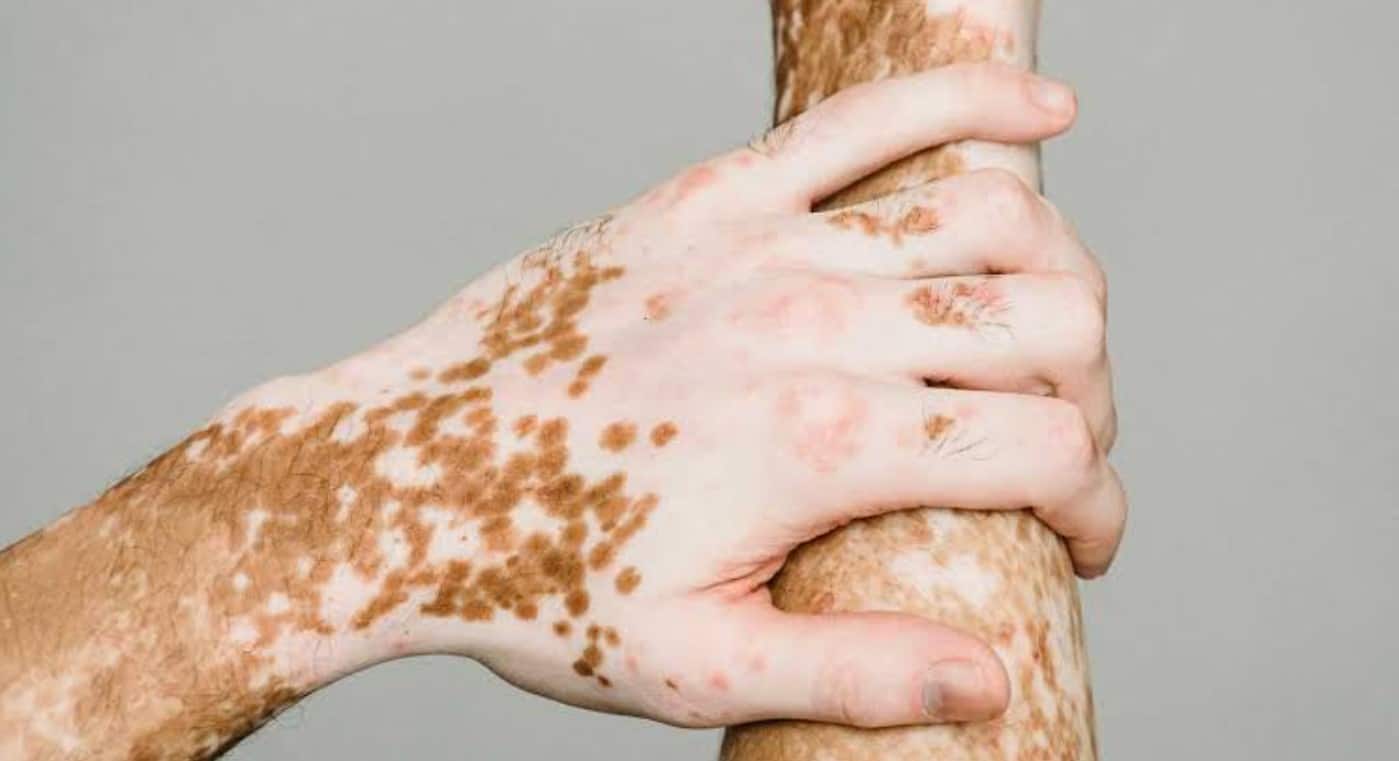
Vitiligo is a long-term skin condition that causes areas of skin to lose their natural colour. It can develop at any age, affect almost any part of the body, and progress differently from person to person. Some people develop a few stable white patches, while others experience gradual or more rapid changes across several areas.
Pigment loss occurs when melanocytes, the cells that produce melanin, become damaged or disappear from affected skin. Although vitiligo is not contagious and does not directly damage internal organs, it is associated with autoimmune activity and can significantly affect a person's confidence and quality of life.
Treatment depends on the type of vitiligo, its location, how actively it is spreading and the patient's preferences. Dermatological care may focus on controlling disease activity, encouraging pigment to return or monitoring stable patches without active treatment.
Healthy skin contains melanocytes that produce melanin, the pigment responsible for much of our natural skin colour. Vitiligo causes affected areas to lose active melanocytes, leading to patches that are lighter or fully white relative to the surrounding skin.
This condition impacts individuals regardless of their skin colour. Pigment loss is often more noticeable in people with medium to darker complexions because the contrast between affected and unaffected skin is greater. In lighter skin, early patches may be harder to identify without specialised examination.
Vitiligo differs from ordinary variations in skin tone or pigmentation caused by sun exposure. Affected areas lose pigment rather than accumulate excess melanin. This distinction affects treatment, as therapies designed to lighten freckles or dark spots do not address the underlying process that causes vitiligo.
Vitiligo Symptomsand Early Skin Changes
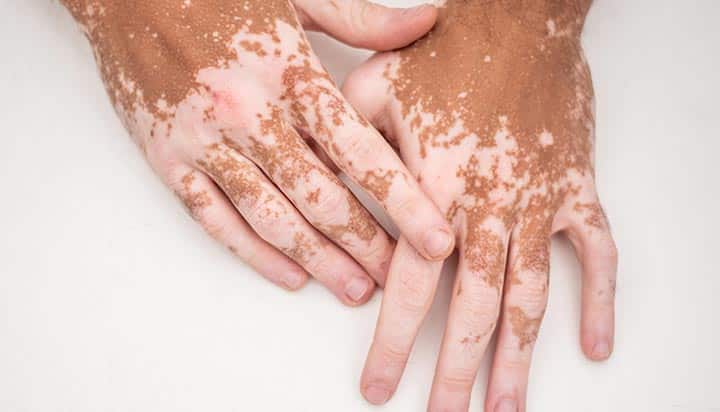
The most recognisable feature is the development of flat, pale or milky-white patches with relatively distinct borders. These may start as small areas of reduced pigmentation and gradually enlarge or merge with neighbouring patches. Common locations include the face, hands, arms, feet, knees and around the eyes, mouth and other body openings.
The skin usually retains its normal texture. Unlike eczema or certain fungal infections, vitiligo patches generally do not develop persistent scaling, thickening or inflammation. Most affected areas are painless, although some people experience mild itching when new patches appear or existing areas become more active.
Pigment loss can also involve hair follicles. Eyebrows, eyelashes, scalp hair, or body hair within an affected patch may turn pale white. Less commonly, pigmentation changes develop on the lips or inside the mouth.
The pattern and rate of change vary considerably. Some patches remain unchanged for years, while others expand over several months. Documenting when the first lesion appeared, which areas have changed and how quickly new patches develop gives the dermatologist information about disease activity.
What Causes Vitiligo?
Autoimmunity plays a central role in most cases. The immune system mistakenly targets melanocytes. The resulting loss of cells that produce pigment causes white patches to develop.
Genetic susceptibility contributes to this process. The risk of developing vitiligo rises if a close relative suffers from it or another autoimmune disorder. However, many patients have no known family history, and inheriting a predisposition does not mean that vitiligo will necessarily develop.
Environmental factors may influence when the condition first appears or becomes more active. Severe sunburn, repeated friction, skin injury and exposure to certain chemicals can contribute to pigment loss in susceptible people. The development of vitiligo at sites of skin trauma is known as the Koebner phenomenon.
Oxidative stress within the skin may also contribute to melanocyte damage and immune activation. Current knowledge points to an interaction among immune activity, genetic susceptibility, and cellular stress rather than a single cause. Emotional stress is sometimes reported around the onset or progression of vitiligo, although it cannot reliably explain an individual case.
Different Types of Vitiligo
Dermatologists classify vitiligo partly according to the distribution of pigment loss. This distinction can influence the expected course of the condition and the choice of treatment.
Type
Clinical features
Non-segmental vitiligo
The most common type. Patches frequently affect both sides of the body and may develop in new locations over time.
Segmental vitiligo
Typically impacts one side or a specific area of the body. It often begins earlier in life and may stabilise after an initial period of progression.
Localised or focal vitiligo
A limited number of patches occur in one area without an established broader distribution pattern.
Generalised vitiligo
Multiple patches involve several body regions, often with relatively symmetrical distribution.
Non-segmental vitiligo can follow an unpredictable course, with periods of stability interrupted by renewed pigment loss. Segmental vitiligo tends to progress over a shorter period, although its response to medical treatment can differ from non-segmental disease.
The extent of visible pigmentation loss does not always indicate current activity. Someone with extensive vitiligo may have had stable patches for years, while another person with only a few small lesions may be experiencing rapid progression. Dermatologists assess both the existing distribution and recent changes when planning management.
Not Every White Patch Is Vitiligo
Several conditions can cause pale patches on the skin, and their treatment differs considerably. Pityriasis versicolor, for example, is a superficial fungal condition that can produce lighter or darker patches, often across the chest, back and neck. Fine surface scaling may distinguish it from vitiligo.
Pityriasis alba commonly affects children and can cause poorly defined, lighter patches on the cheeks, particularly in those with dry or eczema-prone skin. Post-inflammatory hypopigmentation develops after skin conditions such as eczema, psoriasis or injuries and may gradually improve as the skin recovers.
Other possibilities include congenital pigment differences and less common disorders of skin pigmentation. The pattern, surface texture, medical history and appearance under specialised lighting can help distinguish these conditions.
Applying antifungal creams, exfoliating acids or pigmentation treatments without confirming the diagnosis may delay appropriate care. When the cause of a white patch is uncertain, examination by a dermatologist is preferable to relying on photographs or self-diagnosis.
How Dermatologists Diagnose Vitiligo
Diagnosis usually begins with a clinical examination. The dermatologist assesses the colour, borders, distribution and symmetry of the patches, alongside their history of development. Changes involving hair follicles, recent skin injuries and the appearance of new lesions may provide further diagnostic clues.
A Wood's lamp examination can make areas of depigmentation more distinct. Under this specialised ultraviolet light, vitiligo commonly appears bright white, allowing the dermatologist to identify areas that are difficult to see under ordinary lighting. Dermoscopy may provide additional information about pigment patterns and activity around the edges of lesions.
Most patients do not require a skin biopsy to confirm typical vitiligo. A biopsy may be considered when the appearance is unusual, or another diagnosis cannot be excluded through clinical examination.
Vitiligo also has recognised associations with autoimmune conditions, particularly autoimmune thyroid disease. The dermatologist may ask about thyroid symptoms, personal and family medical history, and consider relevant blood tests based on the clinical findings. Not everyone with vitiligo develops another autoimmune disorder, and testing should follow the patient's individual circumstances.
HowVitiligo TreatmentIs Planned
Treatment decisions begin with the pattern and activity of the condition. For someone developing new patches or experiencing rapid enlargement, controlling the immune process may take priority. In stable vitiligo, treatment may concentrate on encouraging pigment to return to existing white areas.
The extent and location of pigmentation loss also influence the approach. Small facial patches may respond differently from lesions on the fingertips or feet. Age, medical history, previous treatment, tolerability and the time a patient can commit to treatment all need consideration.
Vitiligo treatment can involve topical medication, controlled ultraviolet light, selected systemic medicines or specialist procedures for stable disease. Some patients prefer camouflage products or monitoring without active repigmentation treatment. The decision should reflect the patient's clinical findings and preferences, not the assumption that every white patch must be treated.
Topical Treatments for Vitiligo
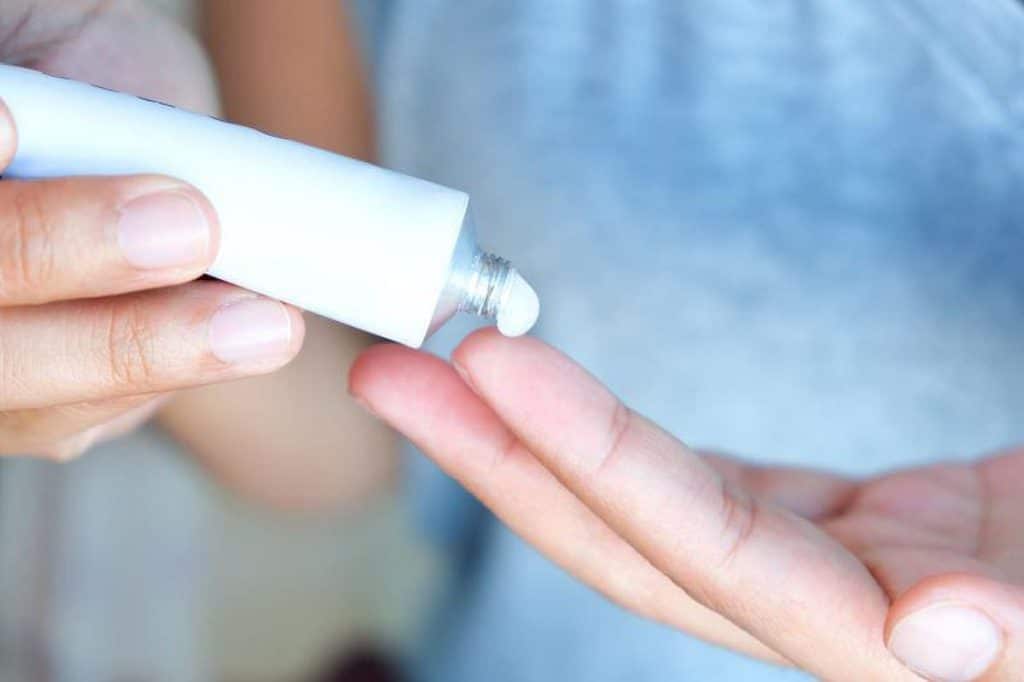
Prescription creams and ointments are commonly considered for localised disease. Topical corticosteroids reduce inflammation and immune activity within affected skin. In selected patients, they may support pigment return, particularly when treatment begins while melanocyte activity remains recoverable.
Use should be guided by medical supervision. Prolonged use of potent corticosteroids can cause skin thinning and other local complications, especially on the face and around the eyes. Treatment may therefore involve limited courses, intermittent application or a different medication for delicate areas.
Another method to manage local immune responses is through topical calcineurin inhibitors such as tacrolimus and pimecrolimus. Dermatologists may consider them for facial or neck lesions and other sensitive areas where repeated corticosteroid treatment is less desirable. Mild burning or irritation can occur after application.
Newer topical treatments that influence immune signalling, including Janus kinase (JAK) inhibitors such as ruxolitinib cream, have expanded treatment options for selected patients with non-segmental vitiligo in certain countries. Suitability, local regulatory status, and access in Singapore require confirmation before considering treatment.
Phototherapy and Excimer Laser Treatment
Controlled ultraviolet light can help with repigmentation by influencing immune activity and stimulating remaining melanocytes. Narrowband ultraviolet B (NB-UVB) phototherapy is a common option, particularly when vitiligo affects multiple body regions or topical medication alone has not produced an adequate response.
Treatment normally involves repeated sessions over several months. The dermatologist adjusts exposure based on the patient's skin type, treatment response, and any signs of irritation. Excessive UV exposure can cause burning and potentially worsen pigment loss, so medical phototherapy follows a controlled dosing protocol.
For smaller or localised patches, targeted ultraviolet treatment may be considered. Excimer laser or excimer light devices commonly use a wavelength of approximately 308 nm to deliver UVB energy directly to affected skin while limiting exposure to surrounding areas.
Phototherapy and topical medication can sometimes be combined. The decision depends on disease activity, treatment location and previous response. Patients should expect a gradual process that requires regular review, not visible change after only a few sessions.
Treatment for Rapidly Spreading Vitiligo
A sudden increase in new patches or rapid enlargement of existing lesions suggests active disease. Dermatologists may prioritise stabilising pigment loss during this period, rather than measuring success solely by the amount of colour returning.
Selected patients with rapidly progressive vitiligo may require a short, carefully supervised course of systemic corticosteroid treatment to reduce immune activity. This is not routine treatment for every patient, and the possible adverse effects must be considered against the speed and extent of progression.
Clinical photographs and follow-up examinations can document changes over time. Once progression has slowed, treatment may focus more directly on repigmentation. Separating these two objectives allows the dermatologist to judge the response more accurately.
Can Vitiligo Be Treated Surgically?
Selected patients with stable vitiligo may be considered for surgical repigmentation techniques when medical treatment has produced limited improvement. These procedures transfer pigment-producing cells or pigmented skin from an unaffected area to a depigmented region.
Options at specialist centres include skin grafting, suction blister grafting and melanocyte transplantation. These techniques are generally reserved for carefully selected cases, particularly localised disease that has remained stable for a sustained period without new lesions or progression.
Active vitiligo is usually unsuitable for transplantation because the ongoing immune process can affect the transferred cells. Surgery also introduces considerations such as donor-site healing, scarring, uneven pigmentation and incomplete repigmentation.
What Results Can You Expect From Treatment?
Repigmentation commonly develops gradually. Small islands of colour may first appear around hair follicles and expand into the surrounding white skin. Pigment can also return from the edges of a patch, depending on the treatment and the remaining melanocyte population.
Response varies between anatomical sites. Typically, the face and neck respond better than the hands, fingertips, feet, and areas with fewer hair follicles. Lesions with white hair can be harder to repigment because they may have fewer remaining pigment-producing cells to support recovery.
Even when treatment achieves substantial repigmentation, the new colour may not immediately match the surrounding skin. Further improvement can occur over time, and some patients require maintenance treatment to preserve the result.
Vitiligo remains a chronic condition, and recurrence is possible. Current treatments can control disease activity and restore pigmentation in many patients, but they cannot guarantee permanent clearance or prevent every future patch.
Caring for Vitiligo-Affected Skin in Singapore
Depigmented skin has less melanin and less natural protection against ultraviolet radiation. In Singapore's year-round tropical sunlight, regular broad-spectrum sunscreen with SPF 30 or higher, protective clothing and shade can reduce sunburn risk.
Sun protection also affects the visual contrast between affected and unaffected skin. When normally pigmented areas tan, white patches may become more noticeable. Consistent protection can limit this difference while protecting skin that burns more readily.
Repeated friction and skin injury deserve attention in people who develop new lesions at sites of trauma. Gentle skincare, appropriate management of eczema or other inflammatory conditions, and avoiding unnecessary irritation can reduce additional skin stress. These measures support skin health, although they cannot replace treatment for active autoimmune disease.
Cosmetic camouflage is another option for patients who prefer a more even-looking skin tone. Specialised makeup or skin camouflage products can reduce visible contrast without altering the underlying condition. They can be used alongside medical treatment or as a separate personal choice.
When Should You See a Dermatologist?
A new white patch should receive assessment when its cause is uncertain, particularly if it enlarges, develops a distinct border or appears alongside similar patches elsewhere. Earlier evaluation can establish if the change represents vitiligo or another condition that requires different treatment.
Specialist review is especially important when new patches appear frequently, existing lesions spread over weeks or months, or pigmentation changes affect the face, hands, or other prominent areas. Children with new depigmented patches should also receive an accurate diagnosis before treatment begins.
A consultation can establish how active the condition is and which management options are reasonable. Patients may also want advice on thyroid-related symptoms, treatment expectations or coping with changes in appearance.
How Lumine Dermatology Can Help
Lumine Dermatology & Laser Clinic provides specialist assessment of changes in skin pigmentation, including unexplained white patches that may indicate vitiligo. A clinical examination can help distinguish pigment loss associated with autoimmune activity from fungal infections, post-inflammatory changes, and other dermatological conditions.
If vitiligo is diagnosed, the assessment considers the distribution of patches, recent progression, affected body areas and medical history. Management can then be discussed according to the individual's condition, including appropriate topical treatment, monitoring and the possible role of specialist phototherapy or referral where indicated.
Treatment decisions should also reflect the patient's goals. Some people want to pursue repigmentation, while others are more concerned about preventing further spread or protecting sensitive depigmented skin. A dermatology consultation at Lumine Dermatology can confirm the diagnosis, clarify realistic treatment expectations, and provide an ongoing skin care plan.
Frequently Asked Questions
Is vitiligo contagious?
No. Vitiligo is an autoimmune condition and cannot spread between people through touch, shared objects or close physical contact. It is not caused by bacteria or fungi, and affected skin does not present an infection risk to others.
The patches may expand across a person's own skin as the disease progresses, but this reflects changes in melanocyte activity rather than transmission.
Can vitiligo be cured permanently?
There is currently no guaranteed permanent cure. Treatment can stabilise disease activity and restore pigmentation in some affected areas, but responses vary between patients.
Some people achieve substantial improvement and remain stable for long periods. Others develop new patches or experience renewed pigment loss after treatment. Follow-up and maintenance therapy may be appropriate, depending on the disease pattern.
Can children develop vitiligo?
Yes. Vitiligo can begin during childhood, and some forms, particularly segmental vitiligo, commonly first appear at a young age. White patches in children still require assessment because pityriasis alba, fungal infections and congenital pigmentation differences can look similar.
Treatment choices depend on the child's age, body areas affected and disease activity. A dermatologist can select appropriate options while accounting for the sensitivity of younger skin.
Does vitiligo always spread?
No. Some people experience a small number of patches that remain stable for many years. Others develop additional lesions intermittently or experience periods of more rapid progression.
The pattern of recent change is more informative than the number of existing patches alone. Monitoring with consistent clinical photographs can establish progression and guide treatment decisions.
Can diet or supplements restore lost pigmentation?
No specific diet or supplement has consistently demonstrated the ability to restore pigmentation in vitiligo. Correcting a confirmed nutritional deficiency may support general health, but supplements should not replace established dermatological treatment.
Patients considering antioxidants, vitamins or other supplements should discuss their use with a doctor, particularly if they take prescribed medication or have another medical condition.
Healthy skin, Happy mood.
We've got your back!
Every skin concern matters. Drop an enquiry, and we'll get back to you within one working day.
Address:
1 Scotts Road #04-15/16 Shaw Centre Singapore 228208
Operation hours
Mon-Fri - 9am to 6pm | Sat - 9am to 1pm | Closed on Sundays & Public Holidays