CoolSculpting in Singapore: How Fat-Freezing Works
Article medically reviewed by Dr. Evelyn Tay
Dr Evelyn Tay is a MOH-accredited Consultant Dermatologist with over 15 years of experience, specialising in Mohs surgery, skin cancer treatment, aesthetics and laser therapy.
Some areas of body fat can remain noticeable even after weight has been stable for some time. Common examples include the lower abdomen, flanks, thighs, upper arms, and the area beneath the chin. For people who want a non-surgical approach to reducing a defined pocket of fat, cryolipolysis is one of the available body-contouring technologies.
CoolSculpting is a branded form of cryolipolysis, more commonly known as fat freezing. It uses controlled cooling to damage selected fat cells beneath the skin. The body then clears the affected cells gradually, so changes in contour develop over the following weeks and months rather than immediately after treatment.
The procedure has specific limitations. It does not treat obesity, replace weight loss or correct every cause of body fullness. Good results depend on selecting the right type of fat, the right treatment area and a patient whose expectations match what non-surgical fat reduction can achieve.
CoolSculpting uses controlled cooling to reduce localised fat beneath the skin without surgical removal. An applicator delivers cooling to a selected area while protecting the skin surface. The process targets adipocytes, which are the cells that store fat.
CoolSculpting and cryolipolysis are closely related terms, although they are not interchangeable. Cryolipolysis describes the treatment principle. CoolSculpting refers to a specific device system that uses this technology. Other fat-freezing devices also exist.
When comparing CoolSculpting in Singapore with other cryolipolysis treatments, it is reasonable to ask which device the clinic uses and how the treatment plan will be designed. Applicator shape, treatment area, tissue thickness and placement all influence the final contour.
How Fat Freezing Affects Fat Cells
Fat cells respond to controlled cold differently from many neighbouring tissues. During treatment, the temperature within the targeted fatty layer falls enough to trigger injury within selected adipocytes. The process does not remove the fat mechanically during the appointment.
Over the following weeks, the affected fat cells undergo a gradual biological breakdown. Immune cells clear damaged cellular material from the treated area. As this process continues, the thickness of the localised fat layer may decrease.
This explains why the treated area does not suddenly look smaller when the applicator comes off. Immediate effects are more likely to include temporary firmness, redness, swelling, or numbness. The contour change develops later as the tissue responds to treatment.
A fat freezing treatment therefore differs considerably from liposuction. Liposuction removes fat physically during surgery, while cryolipolysis relies on a slower biological response after controlled cooling.
The Type of FatCoolSculptingCan Treat
CoolSculpting targets subcutaneous fat. This is the fatty tissue located between the skin and deeper structures such as muscle. It often feels soft enough to pinch and can form localised bulges around areas such as the abdomen or flanks.
Visceral fat behaves differently. It lies deeper inside the abdomen around the internal organs and cannot be reached by an external cryolipolysis applicator. Someone with a firm, rounded abdomen caused mainly by visceral fat may therefore see little change from fat freezing even though the abdomen appears prominent.
Body contour can also reflect loose skin, abdominal wall changes, muscle tone or skeletal anatomy. A person may describe all of these concerns simply as “fat”, yet reducing subcutaneous tissue will not correct each one.
This is why assessment should focus on the anatomy creating the visible concern rather than choosing a treatment from photographs or marketing claims.
Concern
What CoolSculpting can realistically address
Localised subcutaneous fat
Can reduce the fat layer in an appropriately selected treatment area
Visceral abdominal fat
Does not target fat around internal organs
General weight loss
Not designed as a weight-loss treatment
Loose skin
Fat reduction alone may not correct significant laxity
Muscle definition
Does not strengthen or build muscle
Cellulite
Not its primary indication
Large-volume fat reduction
Surgery may produce a greater change when substantial fat removal is required
Areas Commonly Treated WithCoolSculpting
Cryolipolysis works best where there is a defined pocket of accessible fat that fits an appropriate applicator. Common treatment areas include the abdomen, flanks, thighs, upper arms and back. Smaller applicators can target selected areas beneath the chin and along the jawline.
Fat beneath the buttocks, sometimes called a banana roll, and localised fullness around the bra line may also suit treatment in selected patients. The same treatment plan does not apply equally to every area because fat thickness, skin laxity and surrounding anatomy differ.
Treating several adjacent areas also requires attention to the overall contour. Reducing one pocket without considering neighbouring fat can produce an imbalance rather than a smoother transition. Good body contouring should improve proportions across the treatment area rather than create an isolated hollow.
Who May Be Suitable forCoolSculpting
CoolSculpting generally suits adults who are close to a stable body weight and have defined areas of subcutaneous fat that they would like to reduce. Someone looking for a modest improvement in a stubborn pocket of fat is more likely to have expectations that fit the treatment than someone seeking substantial weight loss.
Skin quality also affects the result. Removing some fat from beneath firm skin can refine a contour. If the overlying skin is already significantly loose, reducing the fat underneath may leave the laxity unchanged or make it more apparent.
Previous surgery, scars, hernias, altered skin sensation and certain medical conditions can influence suitability. The treatment area should therefore receive a physical assessment before a practitioner recommends cryolipolysis.
The same principle applies to smaller facial areas. Fullness beneath the chin may come from superficial fat, skin laxity, muscle anatomy or a combination of these. Treatment works best when the selected technology matches the tissue causing the concern.
What Happens During Treatment
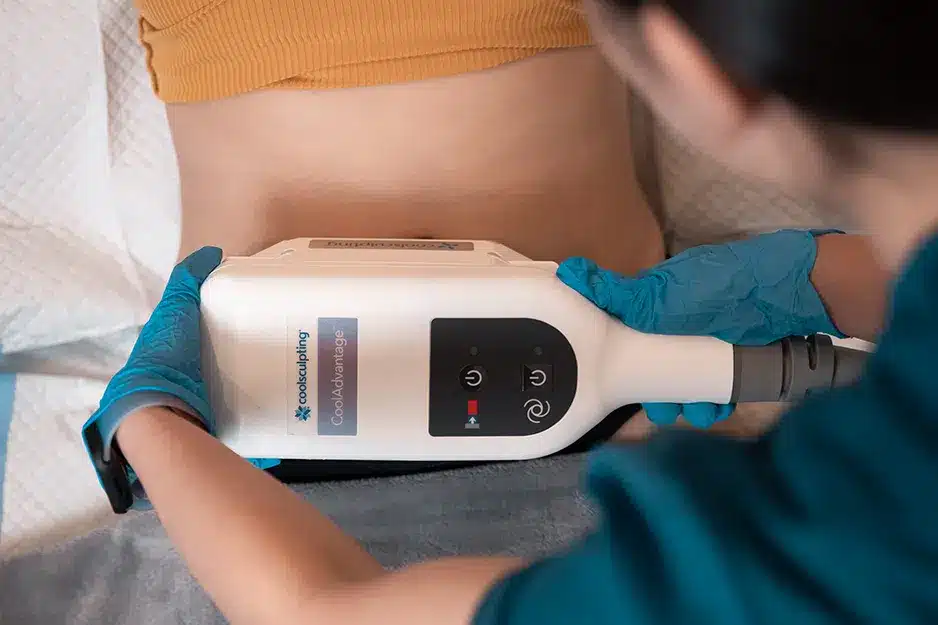
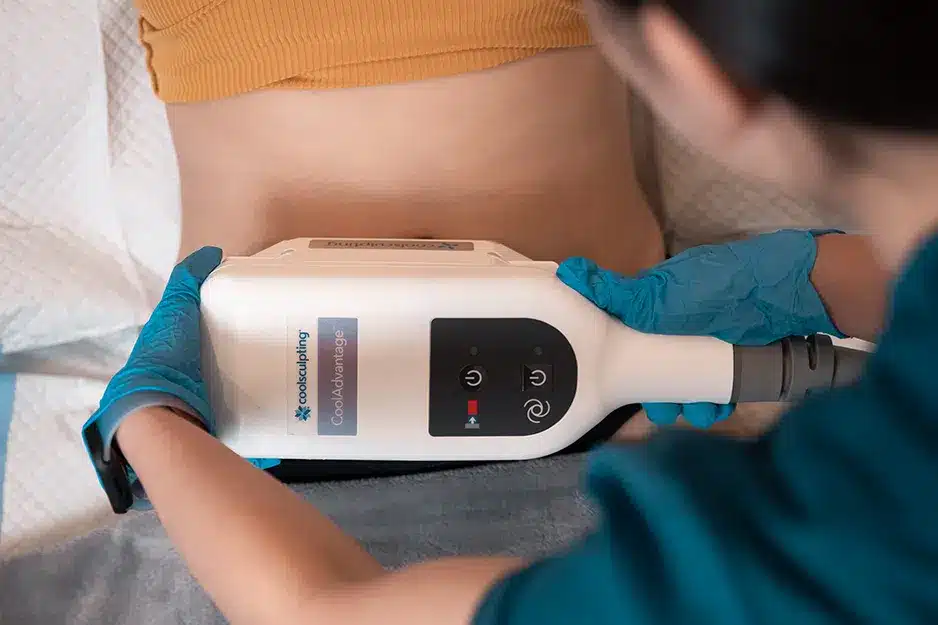
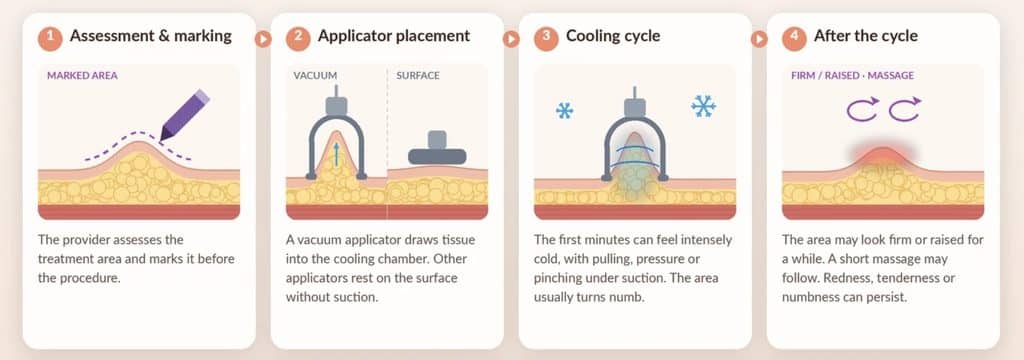
Before the procedure, the provider assesses and marks the treatment area. The selected applicator is then positioned over the pocket of fat. Some applicators use vacuum suction to draw the tissue into the cooling chamber, while others rest against the surface without suction.
The first few minutes can feel intensely cold. Vacuum applicators can also produce pulling, pressure or pinching sensations. As cooling continues, the area usually becomes numb and the initial sensation decreases.
After the treatment cycle finishes, the applicator comes off and the area may appear firm or raised temporarily. A short massage may form part of the treatment protocol. Redness, tenderness or numbness can continue after the appointment.
Most people can return to ordinary daily activities without a surgical recovery period. This does not mean that the treated tissue feels completely normal straight away. Swelling, bruising, altered sensation or tenderness can last longer in some patients.
When Results Become Visible
Cryolipolysis produces a gradual change rather than an immediate one. The body needs time to clear the damaged adipocytes, so the treated area may begin to look different over the following weeks. More complete contour changes generally take several months to develop.
The amount of reduction varies from person to person. Fat thickness, treatment area, applicator placement, individual biological response and the number of treatment cycles can all affect the result. Two people treated in the lower abdomen can therefore have noticeably different outcomes.
Some patients may feel satisfied after one treatment plan, while others may choose another session after the first results develop. Repeating treatment too early makes assessment difficult because the initial biological response is still continuing.
CoolSculpting should produce a local contour change rather than a major transformation in body size. Subtle improvement can still be noticeable in photographs, clothing fit or the transition between neighbouring areas even when body weight remains almost unchanged.
Fat Freezing Does Not Work Like Weight Loss
When someone loses weight through dietary and activity changes, fat cells throughout the body generally become smaller. The body decides where fat volume decreases, which explains why certain areas can remain disproportionately full even after overall weight loss.
Cryolipolysis takes a different approach. It reduces a portion of fat cells within a selected treatment area. That localised effect explains why someone can see a contour change without seeing a meaningful change on the scales.
Removing some fat cells from one area does not prevent future weight gain. Remaining adipocytes can enlarge if body weight increases. Large weight changes can therefore alter the appearance of both treated and untreated areas.
For patients who maintain a relatively stable weight, the local reduction can remain visible for a long period. Ageing, hormonal changes and later changes in weight can still alter body shape over time.
WhatCoolSculptingCannot Correct
One of the most common reasons for disappointing body-contouring results is treating the wrong tissue. Fat freezing cannot reduce visceral abdominal fat. It also cannot repair significant skin laxity, tighten separated abdominal muscles or provide the degree of reshaping possible with surgery.
Cellulite requires separate assessment because its appearance involves fibrous bands, skin structure and the relationship between fat and connective tissue. Simply reducing fat does not reliably correct this pattern.
The same applies to body areas where skin laxity contributes substantially to the contour. A patient may need a skin-tightening treatment instead of fat reduction, or a treatment plan that addresses both concerns separately.
Identifying these distinctions before treatment can prevent unnecessary procedures and unrealistic expectations.
Side Effects After Fat Freezing
Temporary reactions around the treated area are common. These can include redness, swelling, firmness, bruising, tenderness, tingling, itching and numbness. Some people notice altered sensation for several weeks before the area returns to normal.
Treating the area beneath the chin or near other sensitive anatomical structures requires extra care. The practitioner needs to assess nerve position, tissue thickness and the shape of the treatment area before selecting an applicator.
Cryolipolysis does not suit everyone. Certain cold-related blood disorders prevent treatment, and people with cold sensitivity, impaired circulation, reduced sensation, active skin disease, wounds or a nearby hernia may need another approach. Pregnancy and breastfeeding also need to be discussed before any elective body-contouring procedure.
A full medical history allows the provider to identify factors that could increase the chance of complications before treatment starts.
Paradoxical Adipose Hyperplasia
Paradoxical adipose hyperplasia, often shortened to PAH, is an uncommon complication specific to cryolipolysis. Instead of becoming smaller, the fatty tissue within the treated area gradually becomes larger, firmer and more defined.
The change usually develops weeks or months after treatment rather than immediately. The enlarged area may follow the outline of the applicator, which helps distinguish PAH from ordinary weight gain or short-term post-treatment swelling.
PAH does not usually resolve by repeating fat freezing. Patients with established enlargement may need assessment for surgical correction, depending on its extent and location.
Anyone considering CoolSculpting should know that this complication exists before proceeding. It remains uncommon, yet its potential effect on contour and the possibility of surgical treatment make it relevant to informed treatment planning.
CoolSculptingCompared With Liposuction
CoolSculpting appeals to patients who want localised fat reduction without incisions, anaesthesia or a surgical recovery period. The trade-off is that the degree of reduction tends to be more modest and develops gradually.
Liposuction can remove a greater volume of fat and allows the surgeon more direct control over contouring. It also involves surgery, postoperative swelling and recovery, with a different set of risks.
Neither option is automatically better. Someone with a small localised pocket of fat and limited tolerance for downtime may prefer a non-surgical treatment. Someone seeking substantial fat removal or more extensive reshaping may find that surgery matches the desired result more closely.
The choice should follow the anatomy and treatment goal rather than the appeal of avoiding surgery alone.
How Other Body-Contouring Treatments Differ
Not every non-surgical contouring device targets fat in the same way. High-intensity focused ultrasound can deliver energy at selected depths and may address localised fat or tissue tightening depending on the device and treatment parameters. Radiofrequency treatments use controlled heat and may focus more on tissue contraction, collagen remodelling or small targeted fat deposits.
Some technologies target muscle rather than fat. Others primarily tighten skin. Combining every form of body contouring under one category makes comparison difficult because the treatments may be acting on completely different tissues.
For someone comparing options for body contouring in Singapore, identifying the main anatomical concern gives the discussion a much clearer starting point. A soft localised fat pocket, loose skin and poor muscle definition require different treatment strategies even if they affect the same part of the body.
What to Consider Before ChoosingCoolSculpting
A consultation should establish what is producing the contour you want to change. The practitioner should examine fat distribution and thickness, skin quality, and the relationship between the treatment area and neighbouring tissue. Previous procedures and medical history also need consideration.
Ask which device will be used and which areas the practitioner plans to treat. If the clinic advertises CoolSculpting specifically, confirm that the treatment uses the CoolSculpting system rather than another cryolipolysis device presented under a similar description.
It is also reasonable to discuss how many treatment cycles may be required, when the result can be assessed, which temporary reactions are expected and which complications require medical review. Before-and-after photographs are easier to interpret when lighting, position and timing remain consistent.
A realistic treatment plan should also explain when fat freezing is unlikely to produce the result you want. Recommending another treatment, or no treatment at all, can sometimes be the better clinical decision.
A More Realistic Way to Think AboutCoolSculpting
CoolSculpting can reduce selected pockets of fat without surgery, but its role is specific. It works on accessible fat beneath the skin and produces gradual contour changes as the body clears treated adipocytes. It does not replace weight management, treat deeper visceral fat or correct substantial loose skin.
The strongest results start with accurate assessment. If the fullness comes mainly from the type of fat cryolipolysis can target, a carefully planned fat-freezing treatment may create a smoother contour. If the concern comes from another tissue, choosing a different approach can save time, expense and disappointment.
For anyone exploring CoolSculpting or other non-surgical contouring treatments, the procedure should follow the diagnosis of the contour concern, not lead it.
Healthy skin, Happy mood.
We've got your back!
Every skin concern matters. Drop an enquiry, and we'll get back to you within one working day.
Address:
1 Scotts Road #04-15/16 Shaw Centre Singapore 228208
Operation hours
Mon-Fri - 9am to 6pm | Sat - 9am to 1pm | Closed on Sundays & Public Holidays